Fire Department ice water rescue exercise
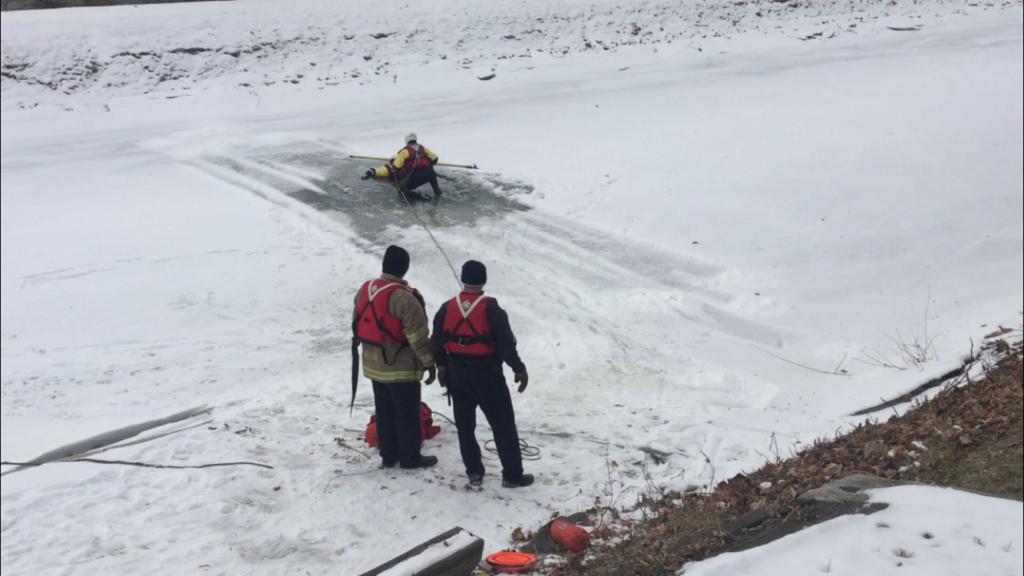
ZANESVILLE, Ohio- The Zanesville Fire Department braves the harsh winds to perform training exercises on the ice.
There was a big hole in the ice in the canal where a crew of firefighters stimulated a water ice rescue. Austin Eveland, a Firefighter and Paramedic with the Zanesville Fire Department, said the team of four firefighters ventured out on the frozen river where one member lowered himself into the icy water.
“We put a guy in the water, which would be our victim, so if someone in the community fell through the ice that would’ve been our victim. And we had a rescuer that responded to the victim and was able to extricate him from the water.”
Eveland said the crews use different techniques to rescue the victim starting with talking the victim through a self-extrication to avoid putting a first responder into the water. Through this technique they encourage the victim to put their hands on the ice, kick their feet, and try to roll out of the water. If that doesn’t work, they move on to the next technique.
“Another technique would be a rescuer technique where we have to send the rescuer out and we’ll put a rope on the victim and then we have…we do these trainings so that we can extricate the victim,” said Eveland.
The firefighters do this training each year so they are always prepared should an emergency occur. Eveland said while they are ready to help someone in trouble if need be, they would prefer for people to avoid the ice waters if possible. He said there is no such thing as safe ice and hypothermia sets in quickly. But he has a few tips for those who still venture out anyways.
“If you are going to be on the ice you’re going to want to check it before you get on. So sound the ice. Make sure it’s not cracking,” Eveland advised. “Check the thickness before you actually step onto the ice and continue to check it all the way to where you’re going.”
Eveland said the cold temps are the hardest part of the exercise, but the crews wear dry suits with gloves and boots to help stay warm.
“We have what’s called dry suits. So the gloves, the suit itself, and then the boots will all keep us dry. And then we’ll wear a ‘pfd’ which is a personal flotation device just for our safety and the person that we’re rescuing because we can’t maintain their body weight and ours.”